Real estate isn’t sold by bricks and mortar; it’s sold through emotions, aspiration, and perception. In today’s market, buyers don’t enter a property to explore it first. They view it online. The photos they see online act as the “first visit,” and within seconds, they decide whether a property is worth their time.
Great property photos spark imagination: a cozy living room, a bright kitchen, and a spacious balcony with a view. But poorly executed photos create doubt. They make a home seem smaller, darker, cluttered, or lifeless, ultimately pushing buyers away.
This is where professional real estate photo editing becomes a game-changer. Companies like Emend Studios help real estate agencies, photographers, developers, and Airbnb hosts transform average images into high-impact listing visuals that sell.
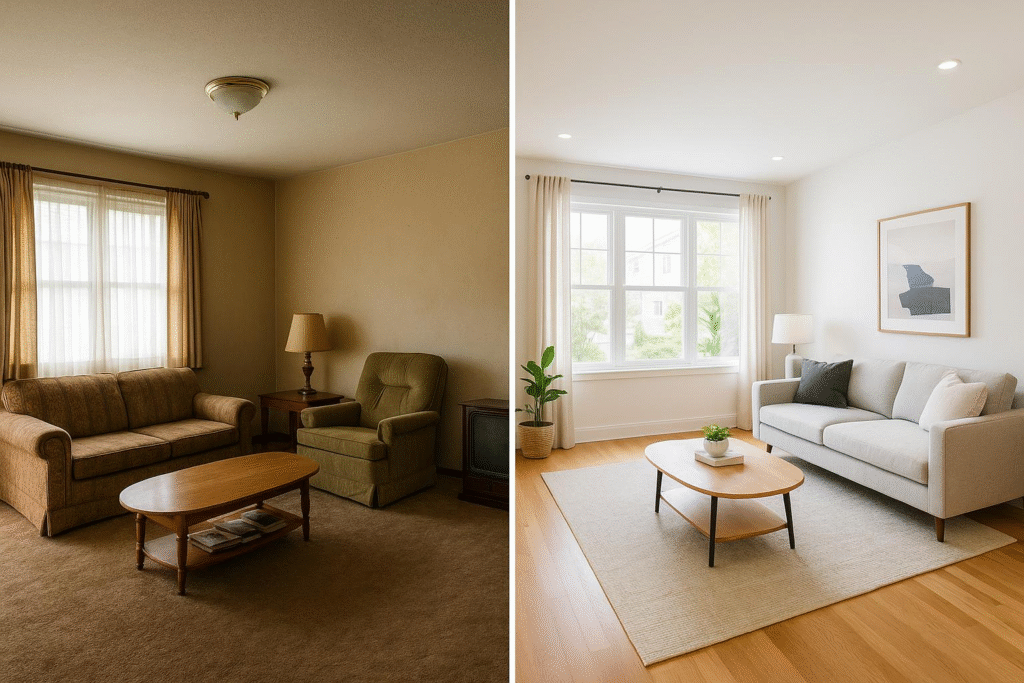
Why Quality Real Estate Photos Influence Buyer Decisions
Whether you’re selling a luxury villa or a compact studio apartment, photos drive sales. Multiple studies confirm that professionally edited real estate images:
- Receive more clicks
- Get more inquiries
- Attract faster bookings
- Increase perceived value
- Lead to quicker property sales
Today’s buyers scroll through hundreds of listings. The ones with crisp lighting, clean composition, and attractive presentation stand out instantly. The ones with messy angles and poor exposure… simply get skipped.
Professional editing helps:
- Showcase a property in its best possible condition
- Create a consistent visual story across every room
- Build trust and a sense of lifestyle
Let’s explore the most common property photo mistakes and how high-quality editing with Emend Studios fixes them.
Most Common Real Estate Photo Mistakes
1. Poor Lighting and Dark Rooms
The human eye is drawn to warmth, clarity, and brightness. A dark or underexposed photo makes a property look uninviting, cramped, or even neglected.
Typical causes:
- Shooting late or early with insufficient daylight
- Strong indoor lighting causing yellow tint
- Low camera ISO settings
- Lack of exposure compensation
Real consequences:
Listings with dull lighting are scrolled past quickly because buyers assume the home has no natural light or poor ambience.
2. Crooked or Poor Composition
If walls appear slanted or floors look uneven, buyers tend to think something is wrong with the construction, even when it’s just a bad camera angle.
Common issues:
- Tilted horizon lines
- Lens distortion from wide-angle lenses
- Poor framing that cuts off furniture or corners
- Shooting from too high or too low
A bad angle makes a large living room look tiny or a kitchen feel strangely shaped. And in real estate, perception is reality.
3. Cluttered or Distracting Elements
Clutter drains emotional appeal. A property may be beautiful, but if photos show dirty dishes, toys, wires, or cleaning buckets, buyers can’t imagine themselves living there.
Why it matters:
- Buyers stop visualizing lifestyle
- Personal items create an uncomfortable experience
- Visual noise distracts from architecture and layout
Real estate photos should feel neutral, polished, and aspirational, never personal or messy.
4. Window Glare or Blown Highlights
Interiors with bright windows can cause one of two problems:
- The outside view is blown away—all white.
- The interior becomes too dim—everything looks dull.
This happens when the camera is unable to balance indoor and outdoor exposure, especially in sunny regions or modern homes with large glass panels.
5. Messy Exterior Photos
Curb appeal begins online. A poorly captured exterior damages perception before buyers see the inside.
Common mistakes:
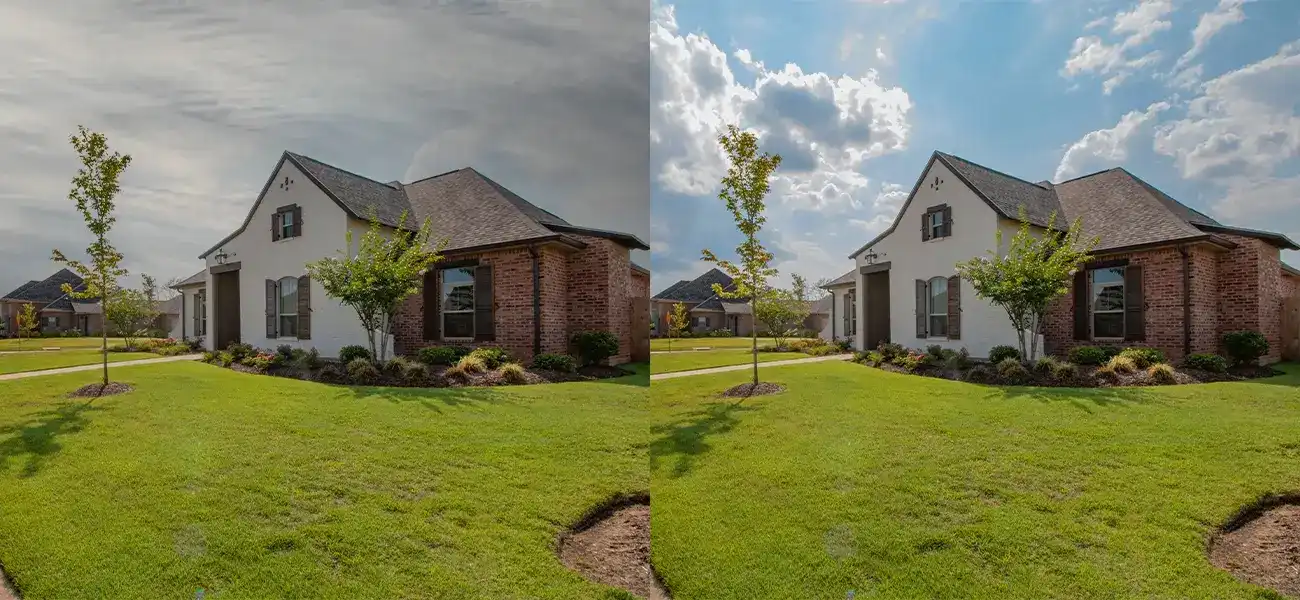
- Cloudy or gray sky
- Broken lawn patches
- Cars, garbage bins, tools, or garden clutter
- Harsh shadows on walls
A single unpolished exterior photo can ruin an otherwise perfect listing.
6. Color Inconsistencies
Different rooms sometimes appear as if they belong to different houses:
- One too warm (yellow)
- One too cool (blue)
- One with fluorescent green tint
Buyers subconsciously feel something is “off,” even if they can’t explain it.
Real estate photography must look neutral, balanced, and harmonious.
7. Blurry or Low-Quality Shots
Common reasons:
- Handheld shots without tripod
- Low light with long exposure time
- Motion blur during shooting
- Low-resolution camera
Blur literally tells the buyer:
The listing isn’t professional.
And if the photos aren’t professional, buyers wonder if the agent is.
How Professional Editing Fixes These Mistakes
Here’s how Emend Studios turns weak photos into powerful property visuals.
Exposure & Brightness Correction
Real estate images must appear bright, airy, and welcoming. Editing allows us to:
- Recover lost shadow details
- Reduce harsh highlights
- Add realistic contrast
- Adjust natural and artificial light balance
Instead of guessing how a room feels,
editing shows the true strength of the space.
Perspective & Alignment Correction
Poor perspective warps reality. Through lens correction and geometry fixes, editors:
- Straighten walls, tiles, doors, and furniture
- Correct distortions from wide lenses
- Normalize vertical and horizontal lines
- Improve realistic proportions
Instantly, a space feels:
- Stable
- Well-built
- Architecturally sound
HDR Blending & Window Enhancements
One of the most powerful techniques in real estate editing is High Dynamic Range (HDR).
Instead of picking between dark interiors or blown-out windows, Emend Studios blends multiple exposures to get:
- Clear interior lighting
- Visible, vibrant outdoor view
- Smooth tone transitions
- Zero unnatural shine or glare
Buyers can see:
- Sunlight
- Trees or city skyline
- Pool or backyard
- Street view
It feels honest, and visually appealing.
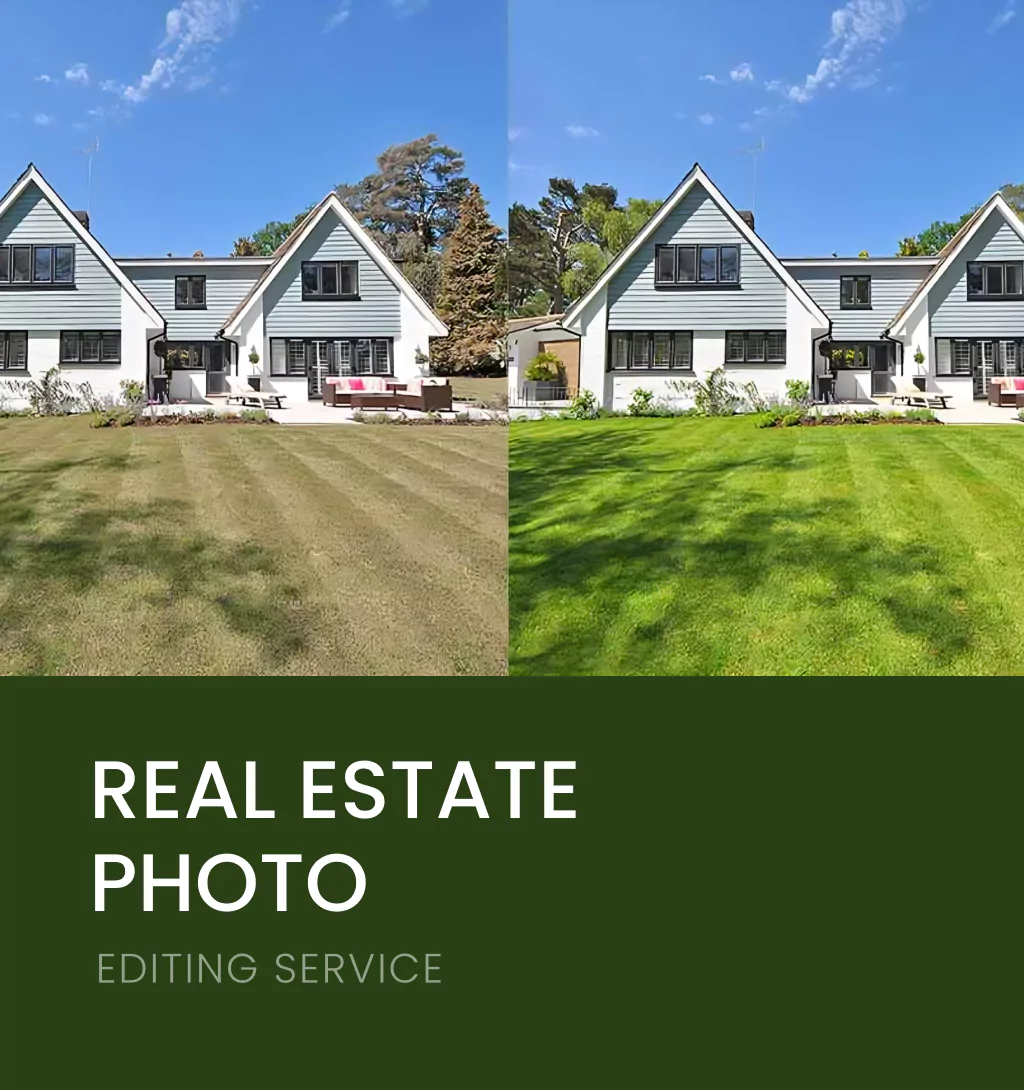
Sky Replacement
A brilliant blue sky changes everything.
- Boosts exterior visual appeal
- Removes weather issues (gray clouds)
- Improves modern property photography
- Adds vibrancy to facades and landscape
You’re not “lying” — you’re simply showing the property under normal or ideal conditions, not at its worst moment.
Color & Tone Correction
Colors must match the real experience:
- White walls that look white — not yellow
- Wood floors with accurate texture
- Metal or chrome with realistic shine
- Marble or granite with true tones
Color correction:
- Eliminates ugly tints
- Matches camera variations
- Creates a uniform listing image set
Sharpening & Noise Reduction
Real estate photos must look crisp.
Noise reduction removes grain from low light photos. Then sharpening enhances details like:
- Cabinet texture
- Window frames
- Tile lines
- Furniture edges
This adds clarity and confidence to the visual.
How Real Estate Editing Improves Listing Metrics
Photo quality directly impacts sales performance. Listings with professional visuals often see:
- Higher click-through rates
- More saved favorites
- Longer page engagement
- Increased inquiries
- Shorter sale cycles
- Higher closing price
When buyers stop scrolling and start imagining —
you’ve already won half the battle.
Final Thoughts
Property listings succeed when buyers believe in the experience they’re seeing. Good photography is the first half of the journey, and professional editing is the second. Together, they shape the emotional bridge between looking and buying.
Bad lighting, clutter, inaccurate colors, or crooked angles don’t reflect reality—they reflect inexperience. And in the real estate world, perception drives value.
If you want your listings to look brighter, cleaner, more luxurious, and more engaging, partner with Emend Studios. We change raw images into real estate visuals that convert clicks into appointments, walkthroughs, and closings.